


What Are the Odds in Gambling? How Betting Odds Work and What They Mean
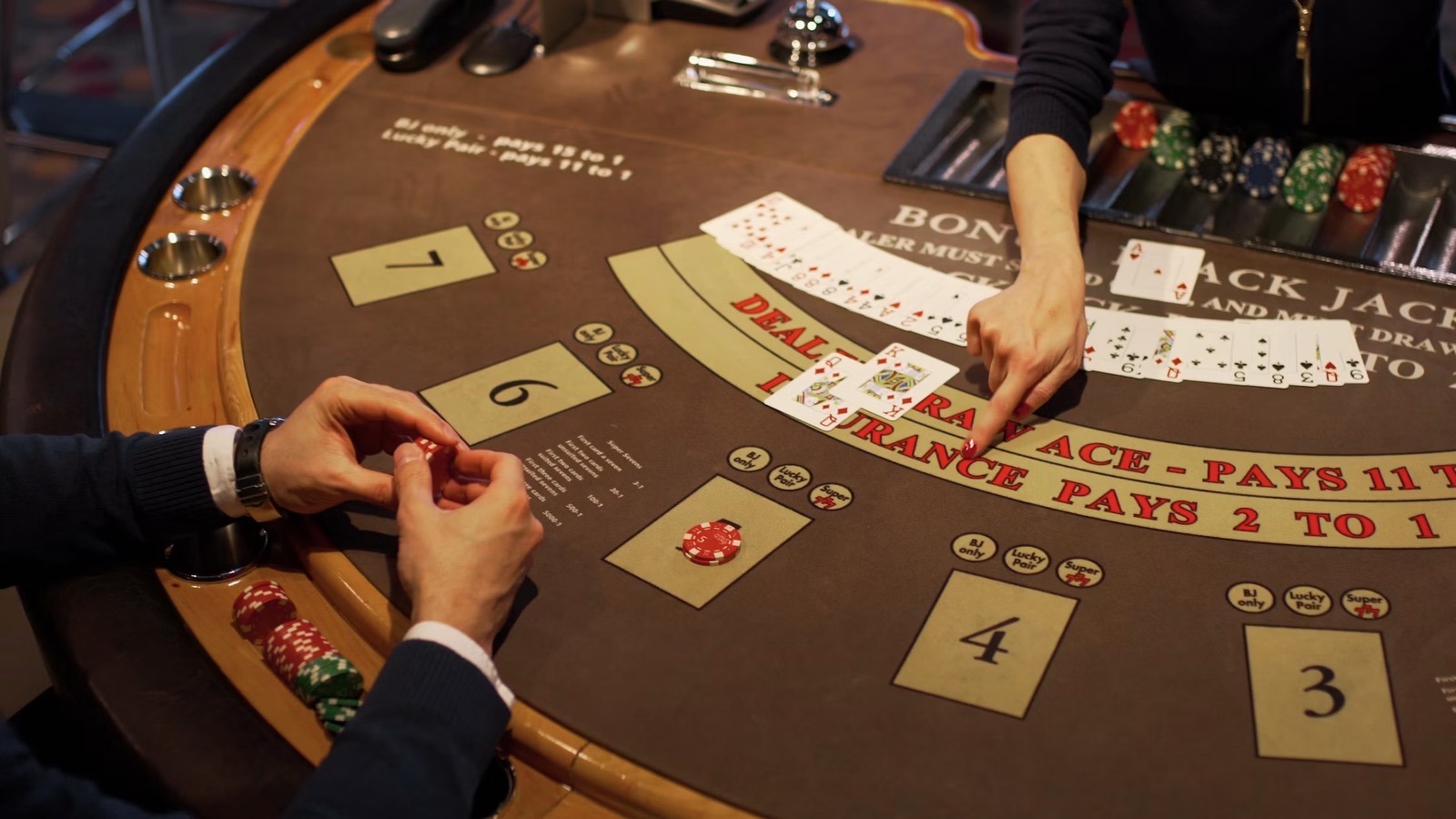
The language of gambling is odds. All bets carry odds, be it a football match, a spin of the roulette wheel or a hand of cards. These figures tell you two things: the probability of an outcome and how much you win if it happens. Most people have a rudimentary idea of this already, but it is worth knowing the physics underlying it fully. How you read these numbers directly shapes where you choose to play – regardless of where in the world you happen to be.
How Odds Knowledge Changes Your Choices
Understanding odds isn’t just an abstract exercise – it determines how you evaluate actual platforms before registering. In regulated markets like Alberta, players navigate a dual structure: PlayAlberta, the AGLC-licensed provincial option, sits alongside offshore-licensed casinos that operate legally for Canadian users.
Both apply odds to govern outcomes, but RTP ranges, bonus terms, and game selection vary considerably between them. Review guides covering online casinos in AB assess platforms on exactly these variables – house edge by game category, wagering requirements attached to promotions, and how payout speeds compare across operators.
A player who understands implied probability and overround reads those comparisons differently than one who picks a platform by bonus size alone. The math is the same everywhere; what changes is the set of numbers you’re applying it to.
That’s what makes odds literacy practical rather than theoretical – it travels with you across every platform and market.
Three Formats, One Concept
Odds appear in three main formats depending on where you’re betting. The underlying calculation is identical – only the presentation differs.
Decimal Odds
Standard across Europe, Canada, and Australia, decimal odds show the total return per unit staked, your original stake included. Odds of 2.50 on a $10 bet return $25 total – $15 profit plus your $10 back. The implied probability is calculated as 1 divided by the decimal: 2.50 implies 40% (1 ÷ 2.50). Straightforward and consistent.
Fractional Odds
Fractional odds are traditional in the UK, common in horse racing, and express profit relative to stake. A 3/1 price implies you win $3 profit for every $1 you stake, plus you get your stake back. A $10 bet at 3 to 1 pays $40 total. Fractions like 6/4 or 11/8 may look weird at first . But the formula is always the same : numerator divided by denominator produces the profit multiplier.
Moneyline Odds
The American format, widely used in North American sportsbooks. Positive moneyline odds show profit on a $100 stake: +150 means $150 profit. Negative odds show the stake required to win $100: -200 means you risk $200 to return $100 profit. Favorites carry negative lines; underdogs carry positive ones. Once that distinction is clear, moneyline odds explained become intuitive quickly.
The House Edge: What Odds Actually Encode
Odds don’t reflect true probability – they reflect the operator’s assessment of probability, adjusted downward to build in a margin. That margin is the house edge, and it exists in every betting market and casino game.
Consider a coin flip. Fair odds would be 2.00 (decimal) or +100 (moneyline) on either outcome. A bookmaker might offer 1.90 on both sides instead. The implied probabilities now total more than 100%: 52.6% + 52.6% = 105.2%. That excess – the overround – is the operator’s built-in profit regardless of which side wins.
Rakeback logic in poker works on the same principle. Knowing the rake structure tells you the true cost of playing a hand, not the apparent one. In sports betting and casino games, understanding the overround or house edge tells you the real cost of any bet – and whether the offered odds represent value or are simply priced to favor the house. That’s the foundation how does betting odds work is built on.
Converting Formats and Calculating Value
Being fluent in format conversion is a practical skill, especially when odds comparison tools display different formats across different books. To explain betting odds across all three formats, the implied probability conversion applies consistently:
| Format | Example | Implied Probability | $100 Stake Returns |
| Decimal | 2.50 | 40% | 250total (150 profit) |
| Fractional | 3/2 | 40% | 250total (150 profit) |
| Moneyline (positive) | +150 | 40% | 250total (150 profit) |
| Moneyline (negative) | -200 | 67% | 150total (50 profit) |
Value exists when your assessed probability of an outcome exceeds the implied probability in the odds. If you believe something has a 55% chance of happening but the odds imply 45%, there’s positive expected value in that bet. It won’t win every time – probability doesn’t work that way – but over a large enough sample, positive expected value produces positive returns.
Casino Games vs. Sports Betting: How Odds Differ
Both environments use odds, but they apply them very differently. Casino game odds are fixed by the game’s design and never change between sessions. Sports betting odds shift constantly in response to new information – injuries, line movement, sharp money – which creates opportunity for bettors who track those movements.
| Factor | Casino Games | Sports Betting |
| House edge | Fixed (roulette ~2.7%, blackjack ~0.5%) | Variable; built into overround (typically 4-8%) |
| Odds movement | None – static by design | Constant before and during events |
| Skill impact | Minimal (strategy reduces edge slightly in blackjack) | Significant – sharp analysis can find consistent value |
| Information advantage | None – RNG determines outcomes | Possible via injury news, public bias, market inefficiency |
| Bankroll volatility | Steady, predictable erosion | Higher variance; larger swings in both directions |
Practical Rules for Reading Odds
For anyone who wants to know how to understand betting odds in a usable way, a few consistent habits make the difference:
- Convert to probability first. Seeing 2.10 in decimal is less useful than knowing it implies a 47.6% chance. Think in probabilities, not formats.
- Check the overround before betting. Add up implied probabilities across all outcomes. A 110% total on a two-way market is high; 104% is more competitive.
- Shop odds across platforms. A +140 moneyline at one book might be +155 at another. Same bet, meaningfully better return.
- Know what even money means. Decimal 2.00, fractional 1/1, moneyline +100 — all equivalent. A win doubles your stake exactly.
- Long odds don’t equal value. A 50/1 longshot is only valuable if its true probability is better than 2%. High odds and good value are different things.
Conclusion
Odds are a representation of probability with a margin built in. How does betting odds work is ultimately a question about how operators price risk – and once that pricing mechanism is clear, you’re in a much stronger position to evaluate any bet or casino game. The format – decimal, fractional, or moneyline – is secondary to understanding the implied probability, the house margin, and whether the offered price reflects genuine value. That’s what odds explained actually means in practice, and it’s the foundation everything else builds on.
Related:
Top Poker Room Recommendation

- 27% Rakeback
- $2000 Sign-up Bonus
- Bonus Code: RBCOM
Let's keep in touch